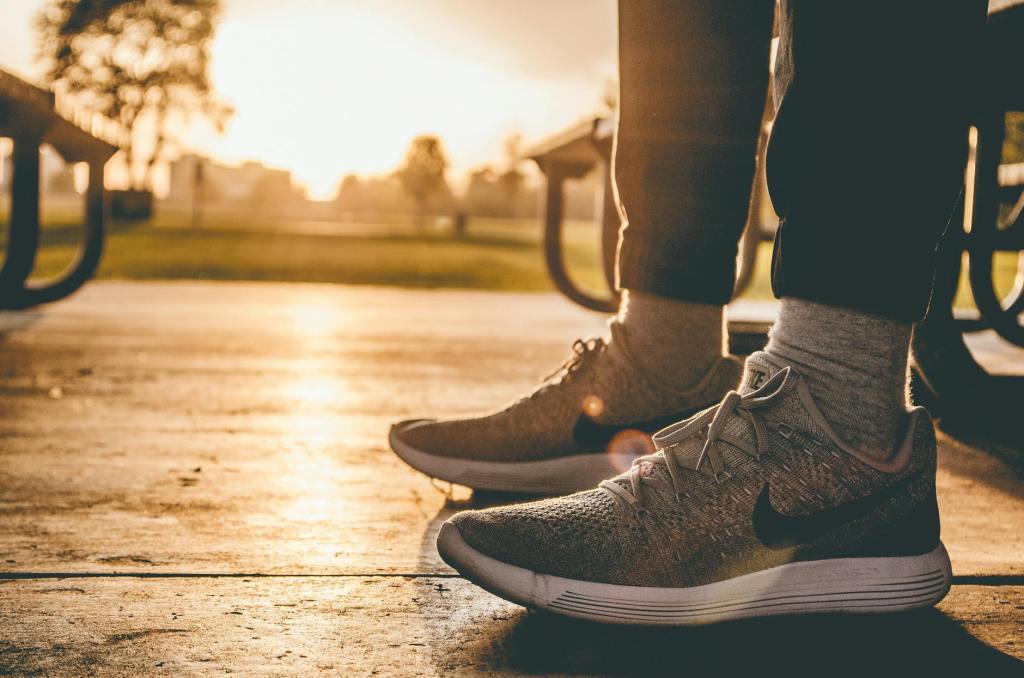
Couch to 5K is an app-based running programme for beginners, designed to get you off the couch and running 5K, without walking (and ideally without throwing up although it doesn’t specify this in the programme), within a designated time period.
When I tell people that I am doing Couch to 5K, they are often surprised because I’m already fairly active and running is nothing new to me. At the start of the programme, I could, at a push (chased by ravenous carnivores?), complete 5K without walking (or throwing up).
However, although I already had a relatively active lifestyle, my exercise routine, per say, was virtually non-existent. It lacked structure. I decided to give Couch to 5K a go because I thought it might provide that structure.
To complete the programme, I am required to show up for 3 sessions each week for a total of 9 weeks. All I need to do is find 30 minutes out of my schedule – or should I say, schedule in those 30 minutes, 3 times per week. The rest of the time, I have former Olympian middle distance runner turned Couch to 5K cheerleader, Steve Cram’s dulcet tones to keep me moving forward when fatigue sets in.
P.S. You can choose your Trainer in the App Settings.
That was then
When I say I was fairly active, I refer to daily walks, some light weight lifting and the odd swim or game of tennis. I was moving my body every day and fairly regularly throughout each day, and avoiding staying sedentary for long periods time despite my desk job.
But as I said, there was no structure: I had no set routine and every week looked different to the next. For some people, this could be viewed positively; after all, does it really matter what type of physical activity we do as long as we’re doing something? Isn’t being active in itself sufficient in terms of our physical and mental wellbeing?
This approach might have helped cultivate a certain amount of spontaneity in the sense, that I could choose what I wanted to do each day or week based entirely on my mood and energy levels and how it would fit into my existing schedule of commitments. When I describe it in this way, even I can see how lovely that sounds – in theory. But I didn’t find it helpful because I prefer to see progress – either in terms of my physical performance or my mental wellbeing – and I wasn’t really feeling either, and certainly not on an ongoing basis.
It might also preserve a sense of novelty and help to prevent that sense of apathy or feelings of boredom that one gets when you’ve been doing the same thing for too long and really need to shake up your routine. However, for me, having too much choice is rarely a good thing and invariably leads to huge dilemmas over what type of exercise to do and when: oh, the time and energy I have wasted, particularly in the summer months when drier, warmer weather (at least in theory) means many more opportunities to exercise outdoors. How does one choose between a long, meandering stroll in the park, a game of tennis or going for a run; and what if you make the wrong decision? When it rains, I invariably feel like I should be at the gym and nothing kills enthusiasm like the word, “should”.
You might be forgiven for assuming that varying the types of exercise I do would be kinder on my (sigh) ageing body as supposed to, say, pounding the pavements several times a week but actually I found the opposite to be the case: I would find myself procrastinating over a visit to the gym (because, if I’m honest, I was sick of the gym), overthinking when to go and how to fit each session around my other commitments which, in itself, was exhausting, then finally getting to the gym, performing the same workout every time and not making any progress. I would then miss a few days – or weeks even, because something always seemed to come up that would prevent me from going, and it would be back to square one – both in the physical sense that my fitness or strength didn’t really improve and, in fact, I was burning out, because I was trying to perform at a level each week that I wasn’t quite at because I hadn’t given myself an opportunity to build up to it in a sensible, gradual way, and in a mental sense that I had to go through that whole cycle of procrastination and essentially forcing myself to do something I didn’t really want to do.
At some point, I recognised that, had I been madly in love with the gym like I had been previously, I would have made it a priority to go (the way I do now with Couch to 5K) but I wasn’t feeling it and so I didn’t.
It was that sense of not being able to get any kind of momentum going that ultimately killed off my visits to the gym. That, and a kind of acceptance that it probably wasn’t very healthy to be constantly this anguished over something as trivial as going to the gym, and that, perhaps, it was okay for me to put it on the back-burner for the time-being – that this didn’t make me some kind of hopeless failure – and to try something different.
I’d felt a certain obligation to perform weight bearing exercise because research shows that women in their forties and beyond are at a heightened risk of osteoporosis, and weight-bearing exercises can help prevent osteoporosis by strengthening bones and muscles. But, again, it’s that sense of “having or needing” to do something that can be really off-putting.
Around this time, I had also become disillusioned with running. I had read somewhere that steady state cardio – like running – can flatten your bum. Seeing as my glute muscles had already started to disappear and my backside was, almost overnight, it seemed, as flat as a board, this didn’t really sell me the idea of running. I had also discovered, again, seemingly out of nowhere, that running wasn’t doing me any favors in terms of my overall wellbeing: instead of generating all the lovely endorphins that I so craved, running over longer distances actually wore me out; drained my energy and left me feeling quite low. Seeing as exercise is supposed to boost your energy levels and lift your mood, this really wasn’t very appealing either. Flat bum and depression? Oh well, that was running of the menu then…
This pattern of exercising, feeling exhausted or unable to find time for the next session, spending days recovering, unable to find a routine, and to build consistency or momentum, that left me feeling stuck for months. I was struggling to motivate myself which was not a feeling I was accustomed to, having been active for most of my adult life without really having to try. I had completely taken for granted that I rarely had to motivate myself to exercise; it was just something I did – a great habit I’d cultivated over decades. This feeling of lethargy, of not particularly wanting to move my body was as uncomfortable as it was unfamiliar.
I had discovered yoga around 5 years ago following a mental breakdown. At the time, I was signed off work and riddled with anxiety. I had achy joints and muscular tension because I tend to carry the physical effects of stress in my jaw, neck shoulders and hips.
Having never tried yoga before, I was delighted to discover that the practice helped me piece myself back together again: it rid my body of tension and discomfort and, at least for the 45 minutes duration of each class, I felt more grounded and at peace with myself. Of course, the anxiety and depression would return in between bouts of yoga but as I persevered each week, the mindfulness element of the practice helped bring me back to my body and to develop a skill of grounding myself in the moment.
When I resumed working again, with the agreement of my line manager, I adjusted my working hours to allow me to continue going to the Tuesday morning class as it had proved to be so beneficial for my mental and physical wellbeing but then COVID happened and the classes went online. With my family all at home, it became too difficult to maintain my yoga habit. Yoga – and other forms of resistance training is a great addition to an exercise routine because it can help strengthen bones and improve muscle mass, which is important because muscle mass declines during perimenopause, and I do dabble every now and again with the odd YouTube video, but I dislike the part where I have to plan when I do it in order to ensure that I am not disturbed.
So it seemed I’d fallen out of love with exercise: yoga and that sense of having to do it within some kind of rigid schedule, the gym with its repetitive workouts and trying to find the time to do them, and the running giving me a fat bum and depression, left me with walking and swimming but then other pursuits began to take priority.
I set out at the start of 2024 to find a creative outlet. I experimented with different activities including creative writing, life writing, pottery painting, vision boarding. They were all great but the one that stuck was watercolor painting which I could do at a weekly art therapy group.
I also built a reading habit, started this blog and creating my silly, little TikTok’s. These all satisfied different needs – reading non fiction satisfied my thirst for knowledge and I love learning about different topics and reading about people’s experiences; the others were about fulfilling the creative side of me which had been overlooked for so long.
For the first time in my life, exercise and fitness seemed to take a backseat. I was delighted to have found other pursuits that I enjoyed and which enhanced my wellbeing but it bothered me that I had become disenchanted at the prospect of moving my body: exercise has been so important to me over the years; it helps regulate my mood and has been a handy coping mechanism during times of stress. I knew I wanted it to be part of my life but with all these other pursuits, on top of working and bringing up two teenage boys, how could I do it all?
The joy of running
At some point during the past few months, I made peace with letting the gym go, and it was around this time that I decided to get back into running in spite of the flat bum rumours. I realised that I missed the mindfulness that steady-state running provides, and a flat backside seems a small price to pay for good mental health. I resolved to do some daily squats to compensate.
I accepted that regular 5k’s were off the menu and, instead, introduced a walk/jog which gave me an endorphin boost without putting too much of a strain on my system. I was still walking and swimming and had started to lift some light weights and do the odd set of squats or lunges around the house but I didn’t feel as fit as I had once been and wanted something that would improve my cardiovascular health.
I was also still somewhat discombobulated by the lack of structure to my routine and wanted an activity I could really focus on.
I was aware of Couch to 5K but had always dismissed it because I’d assumed it was only for running newbies and I could already run 5K. It hadn’t seemed relevant to me before but, with sudden clarity, I just knew one day, that it was.
In the beginning, it was just like my walk/jogs and felt like I was reaping massive rewards with minimal effort but there was a noticeable difference come weeks 3 & 4 when the amount of running, and therefore, physical effort increased. This meant more careful planning on my part as I knew I couldn’t get a way with running on a depleted system the way I might have done in the first couple of weeks. The difference is that, by following a tried and tested programme, I know I am building up my strength and endurance gradually and in a way that isn’t too taxing.
Crucially, by this stage of the programme, I am now fully invested. I don’t mind that I can’t drink the night before a session or that I have to my runs, possibly at the expense of some other pursuits so it’s cultivating discipline and focus. It feels good. It feels good to have a routine that matters to me.
Couch to 5K gives me a goal to work towards, and I get a sense of accomplishment after I’ve completed each session. This is great for me because I am the kind of person that often starts a project and fails to complete it. I think sometimes I attempt to take on too much too quickly and become overwhelmed and, if I miss one session, I lose momentum and it just falls away. I then feel bad about myself and the next time I take on a new challenge, I lack the self-belief to see it through or pile on so much pressure on myself, that I cave before I’ve reached my target. Couch to 5K has given me back my confidence – not just because I am running for longer, feeling stronger, and ticking off each session, but because I’m following through on a commitment I’ve made to myself.
One of the things I love about the programme is the gradual progress towards a goal which helps me to focus more on the journey rather than fixating on an outcome. I am a results-driven person and like to see tangible evidence of my progress and it helps that each session I complete is recorded in the app without me having to do anything more than click a few buttons and show up for each run. It’s structured but in such a simple way, I don’t feel suffocated by it. All I have to do is loosely plan when I do my runs each week and show up for 30 minutes. No overthinking. No procrastination. No burnout.
I know that Couch to 5K will come to an end but I’ve made peace with the fact that an exercise routine doesn’t have to be forever. Things change. Our bodies changes. Our lifestyles change. We have different priorities and we can adapt our routines to suit our changing needs. Couch to 5K is working for me right now. But the most important part is that I am enjoying it. Thanks to Couch to 5K, I’ve fallen back in love with exercise.
I’m excited to see what happens next.
Maybe I’ll give the gym another go…
 awellnessworkinprogress.com
Leave a comment