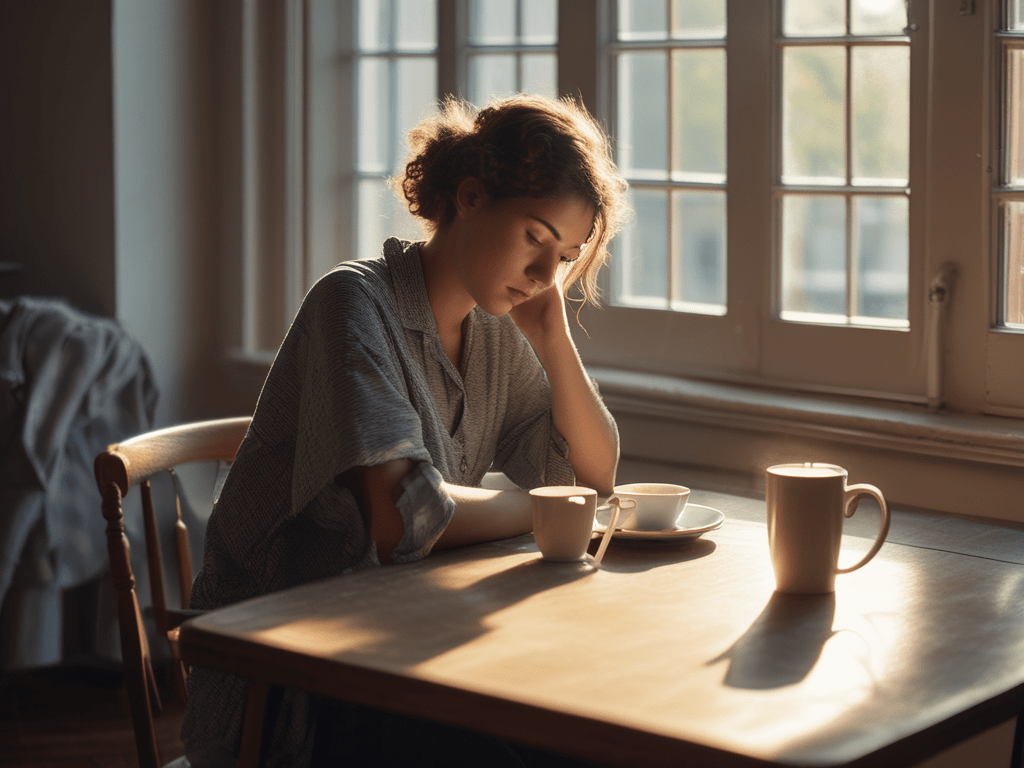
I woke up this morning after, what I thought was, my first semi-decent night’s sleep in around a month.
Despite this, I felt exhausted. As in, bone weary with fatigue. The type of fatigue that you just know is going to linger all day despite your best efforts, making even the most trivial of tasks feel challenging to complete.
I was up a little later than normal as I stayed up to watch golf last night and was allowing myself an extra 15 minutes in bed this morning but it’s amazing how changing parts of your normal morning routine – such as adjusting your wake-up time – can impact on the rest of your morning – even the rest of your day.
Between jostling for position to use the bathroom (which I usually avoid by getting up at least 15 minutes before the rest of the household) and turning my phone on before breakfast instead of after which is my usual routine/rule/boundary, I found myself chasing my tail. Even now, hours later, I still haven’t done my skincare which is usually a rigidly set in stone part of my morning routine. Out of its usual context, my skincare routine has no place in my day, it would seem…
My Mum often refers to ‘dragging her legs’ by way of explaining a fatigue so great, just getting about, physically, can feel like a bit of an ordeal, and often in the context of depression – a condition, which for Mum, has ebbed and flowed for over twenty years.
Over the past few years, it’s become an occasional symptom I, too, have to manage and the expression, ‘dragging my legs’ has become part of my own vocabulary. For me, it’s usually hormone-related – as in, most likely to occur when my hormones are out of equilibrium which, at 45 and confirmed perimenopausal, happens fairly frequently these days.
When I woke up this morning, by my alarm, instead of way before it which has been more common recently, having slept in my own bed all night (which has been a rare occurrence of late – my disrupted sleep has led me to sleep on the sofa more times than I’d care to admit), having fallen asleep almost as soon as my head hit the pillow (again, something of a novelty these days – the past month has seen me routinely tossing & turning each night for at least an hour), having woken just twice (as I recall) during the night (more cause for celebration) and having fallen back to sleep easily on both occasions, I could be forgiven for thinking that, overnight, I might have been transformed back to my former, pre-perimenopause, pre-disrupted sleep, self but I just felt wasted with lethargy.
I am a very solution focused individual and as such, always looking for a cause and, subsequently, a cure or ‘fix’. I am not great at just accepting what is or letting things be. This morning I have attributed this terrible fatigue to one or more of the following:
- perimenopause (it goes without saying that this would be top of the list, seeing as I blame almost everything on perimenopause these days);
- ADHD burnout following a weekend that included quite a bit of travel and a lot of socialising (it was lovely to catch up with family but, as I am generally quite a solitary creature, my social battery needs recharging);
- 24 hours of eating foods that are generally higher in sugar, fat and salt than what my usual diet is used to;
- Dehydration – I tend to drink less when I’m on my travels just because I’m not in my usual routine;
- depression – after a breakdown and subsequent depressive episode around 5 years ago, I live in perpetual fear of the ‘darkness’ returning, so this usually features high on any list of potential causes; I could have a sore foot and still immediately jump to depression as the cause!
- sleeping too much or not enough deep sleep.
All this analysis and overthinking isn’t terribly helpful and only serves to further deplete my energy levels.
Over the past few years, which have included recovery from a mental breakdown including depression, generalised anxiety and panic disorder, a pandemic, bereavement and self diagnosis of ADHD and Autism, I have got better at offering myself kindness and compassion. I recognise that my tendency towards perfectionism, procrastination, functional freeze, social withdrawal etc. can be damaging to my mental wellbeing, and I work hard to manage these behaviours), but crucially, I no longer blame myself for or think of myself as ‘less than’ because I have these propensities. A huge part of that is recognising that life can be challenging when you are neurodivergent and living in a neurotypical world. I can see the link between my neurodivergency and years of mental health issues and crucially I understand why I am the way I am and why certain situations or events that do not bother many of my peers, can present challenges for me – like needing a lot of ‘alone’ time to compensate for socialising, or needing routines in place in order to get anything done.
I have got better at acceptance, and, while my default might be to run off, frantically searching causes and cures and solutions, I can reign it in now, and accept that sometimes you just feel tired; some days are just harder than others. Sure, there might well be a reason or a cause for one’s lethargy (and even though I’m practicing acceptance, I know still to keep an eye on any lingering symptoms just in case they genuinely do need for investigating, not by me but by a qualified healthcare professional) but sometimes we’ll genuinely never know what factor or factors attributed to feeling tired/sick/low/anxious etc. and most of the time IT DOESNT REALLY MATTER!
The most important thing is how we respond to days like these:
- learn to recognise when it’s okay or even helpful to ‘power through’ – and when it’s better to rest.
- accept that, just as our feelings and emotions are transient, so to is our physical reality: some days we are just tired and we can waste a lot of energy trying to figure out why when, left to it’s own devices, the fatigue may go away of it’s own accord without any interference from us; or we can listen to what out bodies are trying to tell us and resolve to rest more or move more depending on what we decide is most likely to help us in that moment (I am still learning what works for me and don’t always get it right: there have been days where I’ve opted for the ‘move more’ approach and this has only served to make things worse).
- be kind to yourself; if you must power through, try to sprinkle in some self care or look for glimmers of joy: this could be simple things like getting outdoors, drinking plenty of water, sipping a warm drink from a favourite mug, allowing yourself a little treat, picking up a book or ducking out for a quick walk in between meetings, stretching your body or taking a warm shower.
- it helps to have a list of things you can do that you know can be helpful on ‘down days’; even when they don’t necessarily feel that way in the moment (like a depressed person unable to experience pleasure from the activities that would normally spark joy), there will things that we can do that will benefit us in the long-run, like staying connected with loved ones or moving our bodies.
- If we simply can’t face these things, that’s okay; we should not berate ourselves if we just can’t bring ourselves to do them. Some days even the smallest things can feel too much for us. It’s at times like these, we adjust our expectations and set the bar lower than usual, and cultivate acceptance and compassion for ourselves. This too shall pass. Tomorrow’s a new day and other similar cliches.
Since I started writing this piece, I noticed I’m still feeling knackered, physically, but I also feel more positive because I’ve found a positive outlet or activity that has perked me up, mentally; this makes it easier to accept an ‘off’ day and to let things be. I can seek out other, similar activities that boost mood or cultivate positivity even on low energy days.
There will be plenty of time for more strenuous physical activity when my body is no longer crying out for physical rest but for now, I am trying to reframe this as an opportunity to tune into other pursuits that provide self care and positive wellbeing while my physical self recoups.
It’s all part of simply letting things be.
 awellnessworkinprogress.com
Leave a comment