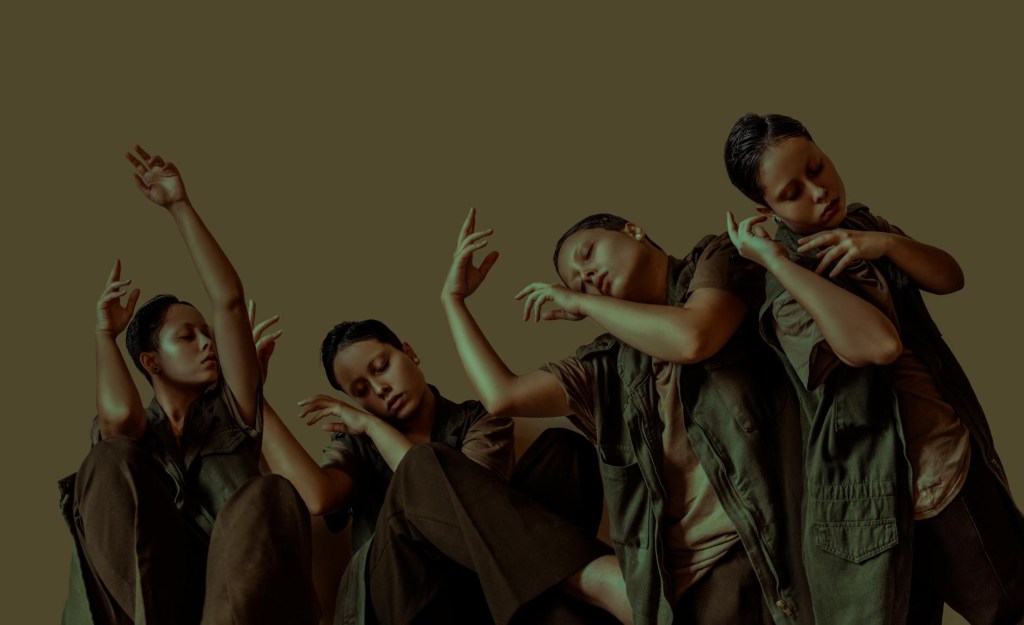
It’s Mental Health Awareness Week here in the UK, and this year’s theme is Movement: Moving more for our Mental Health.
We know that Movement is good for us, right?
Moving our bodies and being physically active helps:
💪Strengthen our bones and muscles
🧠 Improve brain health and prevent cognitive decline
♥️ Keep our lungs and heart healthy
⚖️ Maintain a healthy weight
😴 Promote good quality sleep
😀 Regulate our hormones
I’m sure, by now, most of us are also aware that Movement, in all its many forms, can improve our mental wellbeing – but how exactly?
When we are physically active, our brains release so-called “feel-good” chemicals, like Serotonin, which helps boost our mood, and Endorphins, known for their stress relieving qualities. Even a few jumping jacks or a brisk walk round the block can be enough to reap the benefits.
Endorphins have also been touted as nature’s painkillers for their ability to reduce our perception of pain. While moving our bodies might be the last thing we feel like doing, exercising during our period is an effective way to help manage and reduce the pain associated with menstrual cramps.
Getting active can also help/provide:
🤩 Enhanced memory, greater focus and sharper thinking
🔋Increased motivation and energy levels
These help to increase our levels of productivity – both at work and in our personal lives – and help us view things in a more positive light.
If all that wasn’t enough to get you moving, additional wellbeing benefits of Movement and physical activity – and these might be the most convincing of them all – include:
🦚 Increased confidence and feelings of self-worth from having achieved a specific goal; this might be following through on a promise or commitment to move more consistently; or perhaps by trying something new, learning a new skill or just observing the progress we are making, whether that’s reflected by a number on the scales or steps we take, the weights we lift, the lengths we swim, or how it feels to climb a flight of stairs without feeling out of puff.
🔆 Improved mood: the term, “runners’ high”, refers to that euphoric feeling we get during or after exercise, again, thanks to all those lovely feel-good chemicals released in our brains. And these feelings are not specific or limited to running or cardio-based activity – research indicates that strength training can be just as effective.
⬇️ Reduces stress hormones, such as adrenaline or cortisol, which is why movement in all its many forms is touted as such an effective antidote to stress. Physical activity for stress relief iis even more effective when done in a natural setting such as a park, beach or forest.
👩🔬 Scientifically proven to decrease symptoms of anxiety and depression.
🫂 Reduces social isolation because many physical activities encourage us to get into more social settings – like a park or swimming pool. This reduces feelings of loneliness because it puts us in touch with other people.
Exercise as Movement: reframing how we think about the ‘E’ word
🚴♀️ You might choose to be active by doing exercise. Exercise is physical activity that we tend to do intentionally rather than as just part of every day living, and can include walking, running, cycling and team sports.
But exercise in the way that it has been defined above isn’t for everybody. In fact, the very word itself and the way it is often promoted by our mainstream media can be off-putting for some people: after all, how well do images of professional athletes and fitness influencers actually reflect the average person?
🤔 But what if we were to reframe the way we look and think about exercise – right down to the language we use?
Exercise doesn’t have to be sweaty cardio, lifting heavy weights or pounding the pavements for hours at a time – although, of course, many of us enjoy these activities.
🧗♀️But exercise is a form of physical activity and physical activity is essentially any form of movement your body does that uses energy and this could be as part of everyday activities such as playing with your children, walking the dog, climbing stairs, cleaning, hoovering, carrying grocery shopping, gardening or dancing whilst cooking dinner!
When we think about it this way we begin to understand how we can build more movement into our everyday lives and how this will, in turn, give our mental wellbeing a welcome boost!
Finding the right fit
Those of us who are new to exercise, who are looking to get fitter and healthier but dislike or feel intimidated by the more mainstream portrayal of what exercise actually looks like, may not have found the right ‘fit’.
Like any healthy habit we are trying to build, it is important to find the right fit for you. Why? If you are looking to build a habit, you first need to perform it consistently and you will only do that if you are clear on why you are doing it and most importantly, you like doing it.
If you don’t enjoy going to the gym, you won’t sustain the habit. If you don’t like running, well, what exactly is the point? Far better in the long run to find a form of movement from which you can reap all the aforementioned rewards as well as feelings of pleasure and enjoyment.
I’d be here all day if I tried to identify the right fit for everyone, what with all our different individual needs and wants but, suffice to say, you might want to consider:
Where you move: do you prefer to be indoors or out? Some people find it easier to fit in physical activity if they can do it from the comfort of their own home and, following the pandemic, when so many of us were stuck at home, there has been a boom in the number of online platforms providing everything from dance, Tai Chi, chair exercises, even 5 minute kitchen workouts. Many of these are free, require no equipment other than our own bodies and can be tweaked according to our own individual needs.
Who you move with: we hear a lot these days about the value and importance of connecting with others, and team sports, in-person workout classes, running or walking groups and activities like tennis or lawn bowls provide opportunities to meet new people and make new friends.
However, many of us see movement as a form of self-care and prefer to indulge in activities such as running or swimming alone.
There are certainly wellbeing benefits to be derived from both solo and those activities performed alongside others and perhaps the greatest reward comes from combining the two.
How you like to move: slow, steady or fast? Mindful or sweaty? In my youth, I tended towards more cardio based activity and was under the illusion that physical endeavour had to be sweaty in order to be effective but as I’ve got older (and indeed wiser), and my needs have changed, I try to fit in slower, more mindful activities like yoga and have even dabbled with Tai Chi which my previous self would never have had the patience for.
While I enjoy the more mindful varieties, for me, there is nothing quite like a sweaty treadmill run or hammering it up and down a pool, it’s just that nowadays, my body (and to an extent, my mind) tends to thank me more for the former.
Another consideration is whether movement should be high or low impact. Unfortunately, as we get older and our joints begin to creak, the element of choice slowly diminishes and lower impact activities might take precedence. My recent experiences have shown me that yoga stretches are the order of the day to aid post-run recovery otherwise I’m as stiff as a board.
Identify your “why“
Consider why you want to move more and establish what you hope to gain from getting physically active. This will help towards finding the right fit for you.
For example, are you trying to:
❤️🩹 Get fit or lose weight in order to improve your overall physical health, to reduce the risk of disease, protect bones and build muscle, improve heart and lung health etc.?
👙Improve your physical appearance by losing weight or building strength, perhaps to look good for a holiday or special occasion?
🤕 To aid recovery after injury or illness? An injury acquired through one form of exercise might inadvertently lead you towards another. This type of cross-training might typically be performed by an injured athlete trying to maintain fitness whilst recovering from a specific injury; they might not be able to perform high impact exercises like football, running or tennis but could focus instead on low impact water-based activities to aid recovery.
🔋To boost mood and energy levels? Any form of movement will tick these boxes but the jury’s out on what’s best. To be honest, this is probably subjective i.e. down to what works best for you. For me, personally, a treadmill run used to do it every time but in recent years, high impact cardio activity often drains me both physically and mentally and I find a long, steady paced walk or gentle swim does the job.
🔋To boost mood and energy levels? Any form of movement will tick these boxes but the jury’s out on what’s best. To be honest, this is probably subjective i.e. down to what works best for you. For me, personally, a treadmill run used to do it every time but in recent years, high impact cardio activity often drains me both physically and mentally and I find a long, steady paced walk or gentle swim does the job.
💆♀️To reduce stress? Again, any form of movement is effective in this regard – but it’s entirely subjective what works for you. I know lots of people who swear by a high intensity spin class for optimum stress relief but research indicates that this might not be the best option if our bodies are already under stress. This is because exercise itself is a physical stressor but a good one, if that makes sense: you see, a little bit of stress is good for us – it’s what shows us we’re alive; it’s when stress accumulates that the pendulum swings towards the negative: if you have a work deadline that has to be met, young children and ageing parents that require your time and care, and you’ve been burning the candle at both ends, perhaps drinking too much alcohol, not eating the right foods to nourish your mind and body, and staying up too late at night, it’s likely your body is already under significant stress – then you throw in a high intensity workout and wonder why you feel drained rather than invigorated as you might be forgiven for expecting based on all the hype around exercise as a form of stress relief. Of course, this may work for some but if it’s not working for you, it might be time to explore other options, including gentler forms of movement – like yoga or swimming – that don’t impact us quite so profoundly.
💤 To relax or promote sleep: it’s important to recognise that intense exercise within 3 hours of bedtime negatively impact sleep – as in, we’re likely to be too wired to get to sleep and will instead lie there wondering why we’re still awake when that magazine article we read promised peaceful slumber as a result of our physical endeavours. If we want to relax or promote sleep, yoga or any form of gentle, mindful activity is best. A stroll around your local area after dinner is an excellent shout and can also aid digestion.
Other motivations or incentives to exercise might include:
🫂To meet new people (connecting), to try something new or learn a new skill (growth and learning, cognitive health), to boost wellbeing (mental) as discussed above, to improve energy levels, focus and concentration, boost motivation, help you think, learn and problem solve, reduce the risk of cognitive decline including diseases like dementia.
At the mid-point in my life, when it feels like there are numerous challenges to overcome – including financial concerns, ageing parents, children growing up, marital difficulties, disrupted sleep, hormonal fluctuations, it can be increasingly difficult to find and maintain a consistent routine.
Perhaps, much like life itself, the right fit naturally ebbs and flows and we are on a constant journey to find what suits us best but the message is clear: we should be moving more for our mental health.
 awellnessworkinprogress.com
Leave a comment