
One of the things I remember most from a bout of depression a few years ago was feeling the need to do certain things in order to “fix” myself.
I can vividly recall the feelings of panic that would set in as I struggled to find time to squeeze in a third meditation of the day. In a household of four – including two young children, it wasn’t easy to find a quiet space where I would be uninterrupted and this only added to my frustration.
Meditation was new to me at the time and because I found it effective in temporarily relieving feelings of depression as well as reducing the acute anxiety I was also experiencing at the time, I was keen to engage in it as much as possible. But because I had convinced myself that I was broken in some way, it wasn’t long before I viewed this practice as something that would save me from the evil clutches of mental illness, and it soon became something of an obsession and a crux I relied upon. The irony that I was experiencing anxiety about a practice that was supposed to reduce my stress levels was entirely lost on me.
Fast forward several months and a Support Worker would correct me every time I uttered the words, “I need to do this“ by stating, quite matter of factly, as though it were the simplest thing in the world, “you don’t need to do it, you want to do it”.
The first few times she did this, even though I knew it was with the best intention, I had to work very hard to disguise my annoyance. What did she know about what I did or didn’t need to do? For all she knows, I thought bitterly, my ability to put on that final washing is a matter of life and death!
My emotional literacy wasn’t great at this point and I had little understanding of the power of self-talk in terms of how it can influence the way we think, feel and react; the significance of something as simple as replacing the words, ‘need’ or ‘should’ with the word, ‘want’, was lost on me. I was dismissive, even cynical about something which, on the face of it, seemed overly simplistic in nature and, at this stage, I was still convinced that there was something fundamentally wrong with me and that it would take a hell of a lot more than a little positive self-talk to eradicate my various flaws, discrepancies and general lacking. I had no idea that it could have such a profound impact on how I felt about a task or activity – or myself, and, subsequently, the thoughts, feelings or physical reactions I would experience as a result.
Try it yourself: think of that one thing on your to-do list that’s been bugging you all week; that thing you’re dreading or that you’ve been procrastinating over. The more you think you should do it, the stronger the reaction. The word ‘should’ feels like pressure and fear of failure; the word ‘should’ makes your stomach clench with apprehension or anxiety, possibly even dread.
If I say to myself, I need to change the bedding today, this immediately makes my buttocks clench with a sense of reluctance and dread: the task of changing the bedding becomes an arduous one, and I feel pressure to get it done.
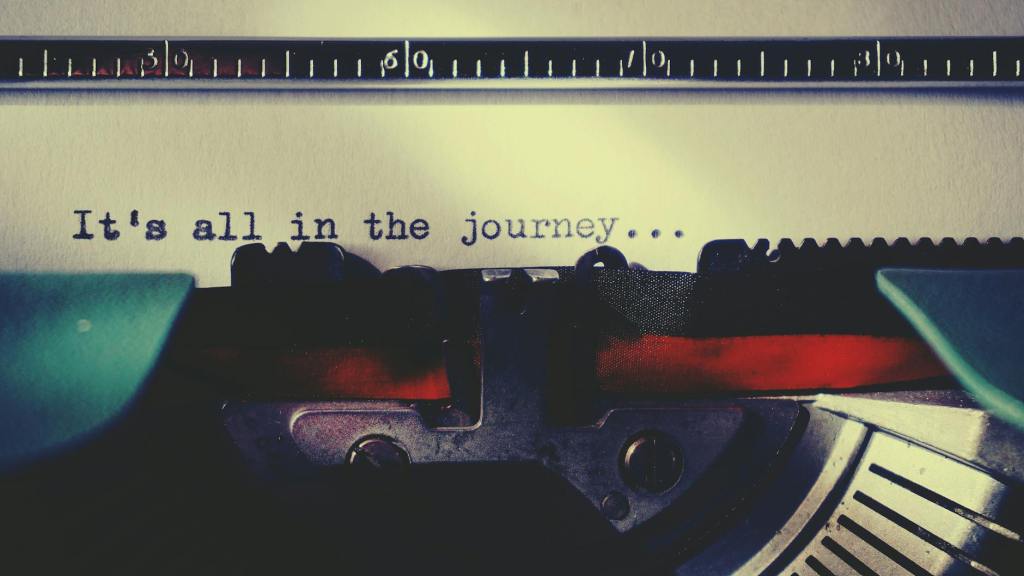
If I change the words to “I would like to change the bedding today”, it sounds more like a goal but without the perceived pressure to achieve that goal. It feels like a choice instead of something forced upon me. This appeals to my rebel tendencies because I dislike being told I need to do something, even when it means I am essentially rebelling against myself. It also tackles the inner procrastinator or person that goes into “freeze” mode when hearing the words, ‘should’ and ‘need’ and is currently in the throes of overwhelm.
An inner dialogue might go something like this:
Self-confessed perfectionist/productivity junkie: “I need to go to the gym today”.
Rebel/procrastinator/overwhelmed person: “I don’t feel like going to the gym today; all the gloss of going to the gym has been ruined by you, oh perfectionist, productive one, telling me that I should go”.
It’s that same reaction I get when somebody tells me to watch a particular movie. In fact, there was such a fuss about the movie, Oppenheimer, it completely put me off watching it. I was Team Barbie all the way – but only because I’d seen the trailer for the movie in the cinema before all the hype and had already decided, without any outside influence ruining it for me, that I wanted to see it.

But I digress…my point is this, wanting to do something rather than feeling like you need to or should do it, is a much gentler, more pleasant approach to getting things done. And it’s not accompanied by feelings of pressure or of shame or guilt or failure if you don’t do them.
If I can follow it up with something more compassionate, like, “if I don’t manage to change the bedding today, I can do it tomorrow”, even better as this reduces the pressure to get it done. If everything becomes a task that needs to get done, simply an item on a check list, there to be ticked off, it can soon become overwhelming and before we know it, we’re heading towards burnout.
Furthermore, if everything falls into the need-to category, then how do we work out what matters most? How do we prioritise? As holistic GP, Dr Rangan Chatterjee points out, not everything can be your number 1 priority. Not everything can matter most – because then, nothing matters!
He recommends, at the start of each day, picking the three most important things you want to achieve that day. And it can be anything you like. The important thing is to choose three things that genuinely matter to you and not because you think they should. There will be some days when family is your number 1 priority or perhaps an important work project but on other days, the single most important thing you do might be going for a walk. The point is, it’s okay to prioritise yourself, the things that matter to you and the activities that nourish you and bring you joy and the things you value for your own self-care – even if it means that family or work or the things that society tells us should be our top priorities all of the time, drop down the list all be it temporarily. Sometimes we need to put ourselves first – be a little selfish even – in order to be the better version of ourselves.
I find focusing less on the need to achieve and on constantly being productive to be more helpful. While it’s lovely to feel like you’re accomplishing your goals – be it, that final Washing or learning a new skill, achieving simply for the sake of achieving and focusing too much on the end goal and forgetting to pay attention to the process, can have negative consequences.

Take oil painting: I joined an art group a couple of months ago. For the first few weeks I stuck to what I knew best which was sketching with colored pencils. It was fantastic to be back doing an activity I had enjoyed so much as a child but in a workspace that gave me ample space and time to really get into a flow state in a way that I could never managed at home what with the comings and goings of other household members, but I was stuck in my comfort zone. I knew I wanted to venture into pastures new but the prospect of change and the uncertainty wasn’t appealing; what if I didn’t enjoy it? Worse, what if I was rubbish? It was only once the group leader gave me a gentle nudge that I decided to give painting with oils a go for the first time. I felt the pressure to do it but it came entirely from within myself (as it usually does) and I knew it wouldn’t let up until I confronted it head-on. And I loved it. I loved the novelty of trying something new, and having to learn a new skill meant that I found myself in an greater state of flow than I had with the sketching. Oil painting takes me completely out of my own head, transferring me to another place entirely where I am completely engaged with this new activity, entirely focused on the task in hand. The best part is that it’s 100 percent about the process and not about the outcome (which isn’t half bad actually).
I shun the need for perfection!
Now, don’t get me wrong – this doesn’t happen overnight. What’s more, when challenging events occur, I believe if one is predisposed to that kind of perfectionist streak, which I undoubtedly am, it’s more likely that one will default to that kind of behaviour when things get ugly which only perpetuates the cycle.
And while it can take months, even years, to eradicate an negative habit or behaviour that’s been embedded for the best part of a lifetime, it is surprisingly easy to fall back into destructive ways, and before you know it, you’re back to square one.
Suffice to say, reducing the need for perfection is something I continue to work on to this day.
 awellnessworkinprogress.com
Leave a comment